
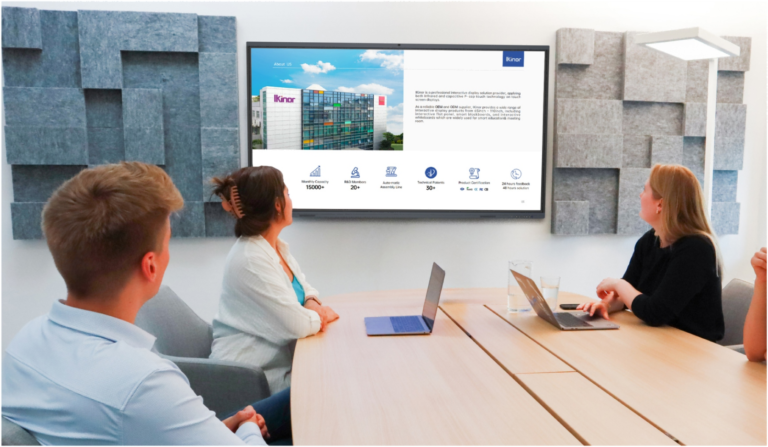
Over the past few years of working closely with the Nepal market, we have seen interactive displays become increasingly popular across both public and private sectors. An interactive display—also known as a smart board or interactive flat panel—combines high-resolution visual output with touch-based collaboration, replacing traditional projectors and whiteboards. In Nepal, growing investments in education modernization, digital government initiatives, and professional office upgrades are driving strong demand. Interactive displays are now widely used in classrooms, government meeting rooms, corporate offices, and training centers operated by NGOs and international organizations. This article is designed to help buyers clearly understand the interactive display landscape in Nepal, including reliable suppliers, realistic price ranges, and practical criteria for choosing the right solution for long-term use.
What Is an Interactive Display and Where Is It Used in Nepal?
An interactive display, also known as an interactive flat panel, smart board, or touch display, is a large-format digital screen that allows users to interact directly with content using fingers or a stylus. It combines a high-resolution display, multi-touch technology, built-in software, and often an Android or Windows operating system into a single all-in-one device. Compared with traditional whiteboards or projectors, interactive displays offer clearer visuals, faster response, and more flexible collaboration.
In Nepal, interactive displays are increasingly adopted in schools and universities, where they support digital teaching, multimedia lessons, and real-time student interaction. Government offices and smart classrooms use them for presentations, training programs, and policy briefings. In the private sector, corporate meeting rooms rely on interactive displays for video conferencing, data sharing, and team collaboration. They are also widely used in training institutes and NGO projects, especially in education, healthcare, and community development initiatives.
Touch-based collaboration is gradually replacing projectors because interactive displays eliminate shadow issues, reduce maintenance costs, improve visibility in bright rooms, and provide a more engaging, hands-on user experience.
Interactive Display Market Overview in Nepal
The interactive display market in Nepal is still at an early but fast-growing stage. At present, the market is mostly import-based, as there is no large-scale local manufacturing. Most interactive displays are imported as finished products, while SKD and CKD solutions are also becoming popular, especially for education and NGO projects. These semi-assembled or locally assembled solutions help reduce overall costs and make it easier to handle logistics, installation, and local compliance.
Nepal relies heavily on suppliers from China and India. China remains the main manufacturing source thanks to its strong OEM/ODM capabilities, competitive pricing, and wide product options. Indian suppliers often play the role of regional distributors or system integrators, particularly for school and government projects that require on-site coordination.
The main buyers in Nepal include private schools, international schools, and NGOs or donor-funded education programs. These organizations usually focus on practical value rather than big brand names. In fact, Ikinor has previously worked with an NGO in Nepal to deliver and customize 10 interactive displays, supporting digital classrooms in local education projects.
However, there are still some clear challenges. Buyers are highly price-sensitive, after-sales support can be limited in remote areas, and power stability and infrastructure conditions must be carefully considered when selecting interactive display solutions.
Top 10 Interactive Display Suppliers in Nepal
Below is a curated list of 10 high-quality interactive display suppliers operating in Nepal, compiled based on online research and industry experience. Some companies are local distributors or regional branches of overseas brands, including smart board manufacturers from China. The information is provided for reference purposes only and does not represent official endorsements.
Ikinor Nepal (International OEM / ODM Partner)
| Item | Details |
|---|---|
| Website | Ikinor-tech.com |
| Founded Year | 2015 |
| Company Profile | Ikinor is an international interactive display and digital signage manufacturer specializing in OEM/ODM solutions. With long-term experience in emerging markets, Ikinor supports Nepal projects through customized interactive displays, flexible assembly models, and project-based delivery. |
| Core Products | Interactive flat panels, smart boards, interactive kiosks, digital signage displays |
| Core Strengths | OEM/ODM customization, factory-direct pricing, SKD/CKD solutions, project experience in education and NGO sectors |
| Location | Manufacturing base in China; project support for Nepal |
| Nepal Experience | Supported NGO education projects in Nepal, including customized delivery of 10 interactive displays |
| Best For | NGOs, education projects, system integrators, B2B wholesalers, brand owners |
Smart Board Nepal
| Item | Details |
|---|---|
| Website | https://smartboardnepal.com |
| Founded Year | 2020 |
| Company Profile | Smart Board Nepal is a local importer, wholesaler, and supplier specializing in interactive smart boards for education and business applications across Nepal. |
| Core Products | Interactive smart boards, touch-enabled flat panels, classroom display solutions |
| Core Strengths | Education-focused solutions, wholesale capability, local distribution and support |
| Location | Kathmandu, Nepal |
| Best For | B2B wholesalers, schools, education system integrators |
Horion Nepal
| Item | Details |
|---|---|
| Website | https://horionnepal.com |
| Founded Year | 2016 |
| Company Profile | Horion Nepal acts as a local distributor of Horion-branded interactive displays, supplying smart boards for classrooms and meeting rooms. |
| Core Products | Horion interactive flat panels, smart boards |
| Core Strengths | International brand backing, stable product quality, education-oriented solutions |
| Location | Nepal |
| Best For | Agents, education projects, corporate buyers |
Himmcom International
| Item | Details |
|---|---|
| Website | https://himmcom.com.np |
| Founded Year | 2018 |
| Company Profile | Himmcom International is an IT and electronics solution provider offering branded interactive smart boards for classrooms, conferences, and corporate environments. |
| Core Products | Hikvision 4K interactive smart boards, commercial displays |
| Core Strengths | Strong brand portfolio, ready stock, project-based sales experience |
| Location | Nepal |
| Best For | Engineering contractors, corporate users, schools |
InfoTechs Nepal
| Item | Details |
|---|---|
| Website | https://infotechsnepal.com.np |
| Founded Year | 2018 |
| Company Profile | InfoTechs Nepal is an IT retailer and solution provider supplying interactive smart boards and digital teaching tools to local institutions. |
| Core Products | Interactive smart boards, education displays |
| Core Strengths | Competitive pricing, multi-brand options, retail accessibility |
| Location | Nepal |
| Best For | Small schools, end users, local resellers |
AC GHAR
| Item | Details |
|---|---|
| Website | https://www.acghar.com |
| Founded Year | 2019 |
| Company Profile | AC GHAR is a consumer electronics retailer that has expanded into interactive panels and commercial display solutions. |
| Core Products | Interactive panels, Hikvision, Uniview, S-Power displays |
| Core Strengths | Broad electronics catalog, physical retail presence, quick availability |
| Location | Nepal |
| Best For | End users, small B2B buyers |
ITTI
| Item | Details |
|---|---|
| Website | https://itti.com.np |
| Founded Year | 2017 |
| Company Profile | ITTI is one of Nepal’s leading IT retailers and enterprise solution providers, supplying branded interactive displays and AV equipment. |
| Core Products | Hikvision interactive smart boards, enterprise IT & AV products |
| Core Strengths | Strong after-sales service, nationwide reputation, enterprise-level support |
| Location | Kathmandu, Nepal |
| Best For | Corporate buyers, institutions, system integrators |
Quality Computer
| Item | Details |
|---|---|
| Website | https://qualitycomputer.com.np |
| Founded Year | 2018 |
| Company Profile | Quality Computer is a regional IT supplier offering smart boards and electronics with a focus on competitive pricing and local availability. |
| Core Products | Smart boards (Hikvision, Horion), IT hardware |
| Core Strengths | Budget-friendly pricing, regional coverage, price transparency |
| Location | Birtamode, Nepal |
| Best For | Budget-focused buyers, small institutions |
Gen I Technology
| Item | Details |
|---|---|
| Website | https://genit.com.np |
| Founded Year | 2016 |
| Company Profile | Gen I Technology provides digital classroom and office solutions, helping organizations upgrade to interactive smart board systems. |
| Core Products | JAV interactive smart boards |
| Core Strengths | Education-oriented solutions, cost-effective offerings, easy deployment |
| Location | Nepal |
| Best For | Schools, training centers |
TradeNepal.online
| Item | Details |
|---|---|
| Website | https://tradenepal.online |
| Founded Year | 2017 |
| Company Profile | TradeNepal is an online B2B marketplace listing educational, industrial, and office equipment from multiple vendors. |
| Core Products | Interactive white boards, office equipment |
| Core Strengths | Marketplace exposure, multi-supplier sourcing, cross-category procurement |
| Location | Nepal (online platform) |
| Best For | Traders, resellers, project buyers |
Interactive Display Prices in Nepal
Interactive display prices in Nepal vary widely depending on screen size, configuration, and sourcing method. Based on current market listings, typical retail price ranges by size are roughly:
- 55 inch: NPR 120,000 – 150,000
- 65 inch: NPR 130,000 – 180,000 (Hikvision 65” commonly around NPR 180,000)
- 75 inch: NPR 170,000 – 230,000 (most popular size for classrooms)
- 86 inch: NPR 270,000 – 300,000+, depending on brand and specs
Several key factors affect pricing. The panel brand plays a major role—LG panels usually cost more, while BOE and AUO offer better cost-performance. Touch technology also matters: infrared (IR) touch is more affordable and common in education, while PCAP touch is smoother but significantly more expensive. System configuration impacts cost as well: Android-only models are cheaper, while Android + Windows OPS setups increase price. Finally, warranty length and local after-sales service are often built into retail pricing.
When comparing local reseller pricing vs direct factory sourcing, the difference can be substantial. For example, a 65-inch interactive display from Ikinor can cost under USD 700, which is approximately NPR 90,000–95,000, even after basic logistics—far lower than typical local retail prices.
Buyers should also consider hidden costs, including installation fees, import tax and VAT, wall mounts or mobile stands, OPS computers, cameras, microphones, and other accessories, which can significantly increase the final project budget.
Key Specifications to Look for Before Buying
After understanding the price range and cost structure of interactive displays in Nepal, the next step is to focus on technical specifications. Choosing the right specs is critical, especially in education and project-based environments where displays are used daily and expected to last for years.
From a display performance perspective, 4K resolution has become the standard for classrooms and meeting rooms, ensuring sharp text, clear images, and comfortable long-term viewing. Brightness and anti-glare glass are equally important in Nepal, where many rooms have strong natural light. Displays with anti-glare tempered glass significantly improve visibility and reduce eye strain.
Touch performance directly affects user experience. Buyers should check the number of supported touch points, especially for collaborative teaching or group meetings. For writing and annotation, low writing latency is essential—teachers and presenters should feel that the pen or finger tracks naturally without delay.
In terms of system configuration, most interactive displays run on Android. A newer Android version offers better security, app compatibility, and longer software support. For advanced use cases, OPS compatibility is highly recommended, allowing users to add a Windows PC for conferencing software, office applications, or local systems.
Finally, durability is often overlooked but crucial. Look for high glass hardness to resist scratches and impact, and ensure the display supports continuous operation stability, especially in schools and institutions that use screens for many hours each day.
How to Choose the Right Interactive Display for Nepal Projects
When selecting an interactive display for projects in Nepal, the most important step is to match the product to the actual usage scenario. For classrooms, priorities usually include large screen size, durable touch performance, and simple software that teachers can use easily. In contrast, conference rooms often require smoother writing, better wireless sharing, video conferencing compatibility, and OPS support for Windows-based applications.
Local operating conditions should also be carefully considered. Power stability can vary across regions, so displays with stable power management and protection features are preferred. In addition, the network environment may be inconsistent in some locations, making it important to choose systems that can operate smoothly offline and do not rely entirely on cloud-based services.
Another key factor is supplier capability. Beyond product pricing, buyers should evaluate whether the supplier can provide professional installation support, reliable spare parts availability, and fast response time when technical issues occur. This is especially important for schools and NGOs that operate in remote areas, where downtime can disrupt teaching or training programs.
Finally, buyers should never overlook the importance of demos and pilot testing. Hands-on demonstrations allow users to evaluate touch accuracy, software usability, and overall performance. Pilot projects help reduce risk and ensure the chosen interactive display truly meets the project’s long-term needs.
Local Supplier vs China OEM: Which Is Better?
When planning an interactive display project in Nepal, buyers often face a key decision: work with a local supplier or source directly from a China OEM manufacturer. Each option has clear advantages depending on project size, timeline, and customization needs.
Local suppliers are usually the better choice for small quantities or urgent requirements. They typically keep stock locally, allowing for fast deployment with minimal logistics complexity. Local partners also offer on-site installation and basic after-sales support, which is especially valuable for schools or offices that lack in-house technical teams. For buyers who prioritize convenience and immediate service, local sourcing provides peace of mind, even at a higher unit cost.
On the other hand, importing from China Interactive Display OEM/ODM Manufacturer becomes more attractive for bulk projects, such as large school upgrades, NGO education programs, or multi-location deployments. OEM factories offer better price control, direct access to manufacturing costs, and greater flexibility in specifications. Buyers can also request custom branding, software configurations, or hardware adjustments, which are rarely available through standard local retail channels.
In practice, many successful Nepal projects adopt a hybrid model. This approach combines China-based manufacturing with local integration, often using SKD or CKD solutions. Displays are produced or partially assembled in China, then completed, installed, and supported locally. This model balances cost efficiency with practical service needs, making it an increasingly popular choice for medium to large interactive display projects in Nepal.
Final Thoughts
Choosing the right interactive display for projects in Nepal is not only about comparing prices—it requires a clear and logical decision process. A practical approach is to start with the application (classroom, conference room, or training center), then define a realistic budget, evaluate the right supplier model (local distributor or smart board manufacturer), and finally confirm the technical specifications that match long-term usage needs.
While low upfront pricing may look attractive, the long-term value of an interactive display comes from stability, usability, after-sales support, and durability. A slightly higher initial investment can often reduce maintenance costs, downtime, and replacement risks over time.
As a next step, buyers are encouraged to request comparison quotes from both local suppliers and experienced smart board manufacturers, and whenever possible, arrange product demos or pilot testing. Seeing real performance in action helps ensure the selected solution delivers reliable results throughout its service life.


 English
  Spanish
  Arabic
  French
  Indonesian
  German
  Portuguese
  Russian
  Vietnamese
  Thai
Thai  Italian