
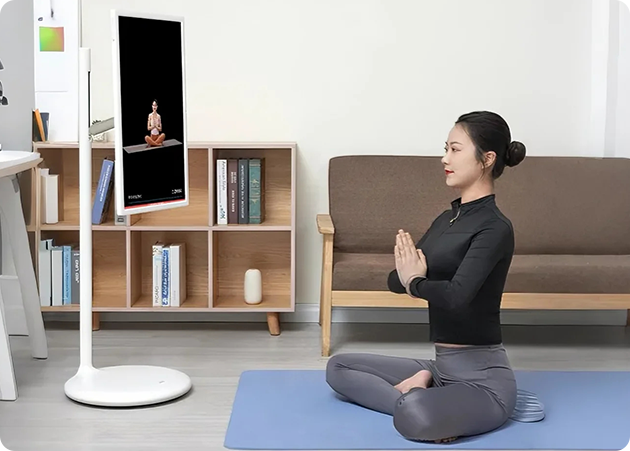
When the LG StandbyME mobile wireless smart touchscreen became a global success, it immediately triggered interest across the commercial display industry. Many interactive display suppliers and all-in-one smart device manufacturers began exploring how to enter this fast-growing market segment. Naturally, the first challenge became clear: how to find the right supply chain and reliable manufacturers capable of producing portable smart touchscreen TVs with stability, quality, and competitive pricing. In this article, I will guide you through the essential landscape of mobile smart touchscreen manufacturers, provide an overview of leading suppliers, and highlight the key factors you must pay attention to during your sourcing journey. Whether you’re a brand owner or a distributor, this guide will help you make informed decisions.
What Is a Portable Touchscreen TV and Why Is It Trending?
Portable touchscreen TVs are mobile, lightweight smart displays available in popular sizes such as 21.5-inch, 24-inch, 27-inch, and 32-inch. They combine the interactivity of a tablet with the viewing comfort of a TV, featuring built-in batteries, multi-touch screens, wireless connectivity, and movable stands. Because they can be rolled or carried into any room, portable touchscreen TVs have quickly become one of the fastest-growing categories in the consumer and commercial display market.

Demand is rising across multiple industries. In educação, teachers use 21.5–27 inch mobile displays for small-group lessons or interactive activities. Businesses prefer 27–32 inch models for presentations, remote meetings, and brainstorming sessions. At events, these screens serve as digital signage or check-in systems. For home entertainment, users enjoy streaming movies, browsing social media, or playing games on a flexible screen they can position anywhere. The fitness and creator economy is also booming—many TikTok streamers now use portable touchscreen TVs to host workout sessions, follow training apps, read live comments, and interact with their audience in real time, often achieving impressive viewer growth.
As more brands try to enter this trend, comparing manufacturers and pricing becomes essential. Different suppliers offer varying hardware quality, brightness levels, battery performance, mobility design, and software compatibility. Prices also differ significantly by size—from affordable 21.5-inch displays to premium 32-inch models with advanced touch technology.
For anyone planning to launch or source a portable touchscreen TV, understanding available sizes and market applications is the first step to choosing the right manufacturer and securing long-term success.
What to Look For in a Portable Touchscreen TV Manufacturer
Choosing the right portable touchscreen TV manufacturer is critical for ensuring product quality, stability, and long-term market competitiveness. The first factor to consider is screen size options, typically ranging from 21.5, 24, 27 to 32 inches. Most portable models focus on compact sizes for flexibility, while 32 inches is considered the larger, more premium option for presentations, education, or fitness streaming.
Tecnologia de toque is another essential element. Manufacturers generally offer Toque IR ou capacitive touch. IR touch is cost-effective and durable, while capacitive touch—similar to smartphones—provides smoother, more precise interaction. Brands targeting high-end markets often prefer capacitive touch for better user experience.
Battery life and mobility are core features of portable touchscreen TVs. A reliable manufacturer should offer a battery that lasts 4–6 hours, allowing users to move freely between rooms or locations without constantly plugging in. Wheels, rotating stands, and lightweight frames also reflect a manufacturer’s engineering competence.
Durability and build quality matter greatly. Look for metal enclosures, tempered glass, and stable bases. Strong OEM/ODM capability is equally important because brands often need custom housing, logos, packaging, or software configurations to differentiate their products.
Software compatibility is one of the biggest success factors. The device must support Android or Windows, allow smooth app installation, and offer UI customization for private-label customers. Many brands require tailored interfaces, custom boot logos, or integrated applications—so a manufacturer with strong software engineering capabilities is invaluable.
Overall, the best manufacturer is one that can balance hardware reliability, software flexibility, and full customization to help your portable touchscreen TV succeed in the market.
Price Range Breakdown: What Affects Cost Of Portable Smart TV?
The price of a portable touchscreen TV can vary significantly, generally ranging from $260 to $1,200, depending on hardware specifications, build quality, and customization requirements. One of the biggest cost drivers is tamanho da tela. Smaller displays such as 21.5 or 24 inches fall on the lower end of the price range, while larger 27- or 32-inch models cost more due to higher panel costs and enhanced structural stability. Brilho also plays a role—standard indoor models may use 250–350 nits, whereas premium units offering 400–500 nits for brighter environments will be more expensive.
O processor and internal hardware greatly influence performance and pricing. Low-end models may use basic chipsets suitable for simple apps and video playback, while high-end versions feature powerful processors like the RK3588, known for its superior graphics, fast response, and ability to run advanced applications. RAM and storage upgrades also add cost, especially when moving from 2+16GB to 8+128GB configurations.
Tecnologia de toque has a noticeable impact on pricing. Toque IR is more affordable and durable, while capacitive touch offers a premium, tablet-like experience—but at higher cost.
Mobility features such as wheels, rotating stands, or foldable frames can also increase price depending on design complexity.
Finalmente, OEM customization—including branded housing, unique UI design, packaging, and software integration—adds additional cost but is essential for brands looking to differentiate their products.
In simple terms, low-end models prioritize affordability and basic function, while high-end models focus on performance, premium touch experience, enhanced mobility, and advanced software capability.
Top 11 Portable Touchscreen TV Manufacturers
Dongguan Ikinor Technology ltd.

| Categoria | Detalhes |
|---|---|
| Nome da empresa | Ikinor |
| Biografia | A leading commercial display and digital signage manufacturer in China, specializing in interactive smart boards, kiosks, floor-standing displays, and customized touchscreen solutions. Strong R&D background and exports to global markets. |
| Linha de produtos | Floor-standing digital signage, interactive kiosks, mobile smart screens, touchscreen monitors, self-service kiosks, portable digital signage. |
| Informações de contato |  |
| Price Overview | $180–$520 depending on size (21.5–32 inch), touchscreen type, and customization level. |
| OEM/ODM Strengths | 15+ years production experience; complete in-house assembly lines; supports SKD/CKD; strong software–hardware integration; full customization (housing, UI, firmware); reliable QC and global project experience. |
Cozyla
| Categoria | Detalhes |
|---|---|
| Nome da empresa | Cozyla |
| Biografia | Specializes in portable smart TVs and rolling touchscreen displays. |
| Linha de produtos | Portable touchscreen TVs, rolling smart TVs. |
| Informações de contato | |
| Price Overview | $934–$1,104 (retail range for 32″ portable smart TV) |
| OEM/ODM Strengths | Ready stock; supports small–medium orders; fast delivery. |
MWEdisplay
| Categoria | Detalhes |
|---|---|
| Nome da empresa | MWEdisplay |
| Biografia | Expert in battery-powered portable smart TVs with mobility features. |
| Linha de produtos | Portable TV on wheels; 18,000mAh battery smart screen. |
| Informações de contato | |
| Price Overview | Typically $199–$499 depending on size and spec |
| OEM/ODM Strengths | Strong battery integration; mobility-focused engineering. |
SOSU Technology
| Categoria | Detalhes |
|---|---|
| Nome da empresa | SOSU Technology / Hangzhou Gaoke Industry |
| Biografia | Manufacturer of portable smart TVs and digital signage. |
| Linha de produtos | Portable smart TVs, smart flat screens, digital signage. |
| Informações de contato | |
| Price Overview | $199–$499 (typical portable display range on Alibaba) |
| OEM/ODM Strengths | Custom design, traceability, sample processing, stable logistics. |
Kingone
| Categoria | Detalhes |
|---|---|
| Nome da empresa | Dongguan Kingone Electronics Co., Ltd. |
| Biografia | A major commercial display manufacturer with strong OEM capacity. |
| Linha de produtos | StandbyMe-style portable TVs, kiosks, digital signage. |
| Informações de contato | |
| Price Overview | $163–$356 (based on screenshot examples) |
| OEM/ODM Strengths | 8,000–10,000 m² factory; 120–130 staff; 100% on-time delivery; strong mass production. |
Shenzhen Qunmao Display Technology Co., Ltd.
| Categoria | Detalhes |
|---|---|
| Nome da empresa | Shenzhen Qunmao Display Technology Co., Ltd. |
| Biografia | Specialist in small-batch custom displays. |
| Linha de produtos | Digital screens, compact touch displays, kiosks. |
| Informações de contato | |
| Price Overview | Approx. $180–$400 based on similar category products |
| OEM/ODM Strengths | Light customization, full inspection, 4.9/5 rating. |
Ingscreen
| Categoria | Detalhes |
|---|---|
| Nome da empresa | Hangzhou Ingscreen Technology Co., Ltd. |
| Biografia | High-tech interactive display and kiosk supplier. |
| Linha de produtos | Touch kiosks, digital signage, portable touch displays. |
| Informações de contato | |
| Price Overview | $200–$500 depending on size (21–32 inch typical) |
| OEM/ODM Strengths | 120+ staff; 7,300 m² facility; 4.9/5 reviews; strong R&D. |
Guangzhou Zhengfeng Technology Co., Ltd.
| Categoria | Detalhes |
|---|---|
| Nome da empresa | Guangzhou Zhengfeng Technology Co., Ltd. |
| Biografia | Flexible commercial display manufacturer for small and mid-size orders. |
| Linha de produtos | Digital signage, touchscreen devices, custom display products. |
| Informações de contato | |
| Price Overview | $200–$450 typical for portable smart displays |
| OEM/ODM Strengths | Traceability, QC, fast response, 4.9/5 rating. |
Shenzhen Masrui Technology Co., Ltd.
| Categoria | Detalhes |
|---|---|
| Nome da empresa | Shenzhen Masrui Technology Co., Ltd. |
| Biografia | Established kiosk and digital display manufacturer with strong QC. |
| Linha de produtos | Portable monitors, digital signage, kiosks. |
| Informações de contato | |
| Price Overview | $150–$350 for 21.5–32 inch portable screens |
| OEM/ODM Strengths | 50+ staff, 4 QC inspectors, 99.8% on-time, high review count. |
Shenzhen Gbzk Electronics Co., Ltd.
| Categoria | Detalhes |
|---|---|
| Nome da empresa | Shenzhen Gbzk Electronics Co., Ltd. |
| Biografia | OEM producer for Fortune 500 brands; advanced electronics manufacturing. |
| Linha de produtos | Digital signage, kiosks, custom touchscreen devices. |
| Informações de contato | |
| Price Overview | $200–$500+ depending on customization level |
| OEM/ODM Strengths | Private mold, strict material QC, $2.7M online revenue. |
Guangdong Duiying Electronic Technology Co., Ltd.
| Categoria | Detalhes |
|---|---|
| Nome da empresa | Guangdong Duiying Electronic Technology Co., Ltd. |
| Biografia | Producer of StandbyMe-style TVs and innovative holographic displays. |
| Linha de produtos | Portable TVs, hologram boxes, digital signage, transparent OLED. |
| Informações de contato | |
| Price Overview | $180–$450 (typical for portable and stand-up touchscreen displays) |
| OEM/ODM Strengths | Advanced testing, strong innovation, 4.9/5 rating. |
Comparison Chart: Features vs. Pricing Across Ikinor And Famous Brands

| Feature Category | LG StandbyME 32U889SA | Apolosign 32″ Smart Portable TV | Ikinor Portable Touchscreen TV (21.5–32″) |
|---|---|---|---|
| Size Options | 32″ only | 24″, 32″ (1080p or 4K) | 21.5″, 24″, 27″, 32″ |
| Touch Type | 10-point touch (IPS panel) | 10-point multi-touch (VA panel) | IR / Capacitive (depending on model) |
| Resolução | 4K UHD | 1080p or 4K | 1080p or 4K optional |
| Brilho | 350 nits | 300 nits | 350–500 nits (model dependent) |
| Viewing Angle | 178° | 178° | 178° (IPS options available) |
| Sistema operacional | webOS | Android 15 (EDLA certified, full Google Play access) | Android / Windows (customizable) |
| Portability Features | Wheeled base, 360° rotation, tilt/swivel/height adjustment | 5 wheels, 360° rotation, ±20° tilt, vertical mode, 6-hour battery | Optional wheeled stand, mobile floor base; battery optional based on OEM spec |
| Battery Life | No battery (AC-powered only) | 6 hours | 4–6 hours optional (OEM choice) |
| Connectivity | USB-C (x3), AirPlay 2, Screen Share, streaming apps | Wi-Fi, Bluetooth, HDMI, AirPlay, Miracast, Google apps | Wi-Fi, Bluetooth, HDMI, USB; screen casting optional |
| Camera & Audio | Stereo speakers; no camera | 8MP camera + mic + dual speakers | Customizable camera & speakers (OEM/ODM) |
| Software Features | Streaming apps, cloud gaming, screen sharing | Google Assistant, Gemini AI, family dashboard, smart home integrations | Custom UI, app integration, branding options |
| Garantia | 1-year standard + optional extended | Free 30-day trial + standard warranty | OEM warranty (typically 1 year; extendable for B2B clients) |
| Faixa de preço | $799.99 (retail) | $699 (sale) / $799 | $180–$520 depending on size & specs |
| Best For | Premium consumers, home entertainment, brand-focused users | Families, creators, smart home users, portable entertainment | B2B buyers, schools, events, retail stores, OEM private-label brands |
| Key Advantage | Most polished premium OS (webOS) + strong hardware | Best software flexibility (Android + Google Play + battery) | Best price-to-performance + OEM custom manufacturing ability |
Business Investigation Tips for Portable Smart Touchscreen TV (220 Words)
When researching the portable smart touchscreen TV market, selecting the right keywords is the first step toward gathering accurate and useful data. Start with core product terms such as “Portable Touch Screen TV,” “Movable Wi-Fi Smart Touch Screen,” “Wireless Smart Monitor,” “Android TV on Wheels,” “Mobile Smart Display,” e “Rolling Touchscreen TV.” These keywords help you identify real manufacturers instead of resellers, and they also allow you to compare technical trends—like battery life, display size (21.5–32 inches), touch technology, or processor performance. Additionally, adding phrases like “OEM,” “ODM,” “Factory,” ou “Manufacturer” can further narrow results to legitimate production companies.
Beyond keyword research, there are several reliable places to find verified suppliers depending on the region you’re targeting. For China—the largest manufacturing hub for portable touchscreen TVs—platforms like Alibaba, Made-in-China, Global Sources, 1688e Shenzhen/Canton Fair exhibitor lists are the best starting points. These platforms often provide certifications, factory photos, staff count, and production capacity, making it easier to assess a supplier’s reliability.
If you are researching suppliers in Southeast Asia, consider platforms such as Indiamart (India) ou Lazada/Shopee manufacturer directories (Vietnam, Thailand, Malaysia). For global sourcing, LinkedIn, YouTube factory tourse industry directories (AV/Display Expo lists) also provide valuable insights.
Combining strong keyword research with region-specific sourcing platforms gives you a clearer, more accurate picture of the portable touchscreen TV supply chain—helping you identify trustworthy manufacturers for long-term cooperation.
How to Choose the Best Manufacturer for Your Needs
Choosing the right portable touchscreen TV manufacturer starts with clearly identifying your primary use case. Different applications require different technical strengths. For example, a streamer or fitness creator who broadcasts on TikTok or YouTube will need a model with an outstanding camera, noise-reduction microphone, and stable wireless casting. Meanwhile, education or conference environments may prioritize a larger 27–32 inch display, wide viewing angles, durable materials, and multi-device connectivity. Retail or interactive showroom users often seek stronger mobility features (wheels, battery life, 360° rotation), plus the ability to run custom apps or signage content.
Budget is another essential factor—especially for buyers in developing regions such as Southeast Asia, South America, or Africa. In these markets, price-sensitive users often prefer manufacturers that offer a balanced solution: reliable hardware, but without premium-cost components like high-end processors (e.g., RK3588) or 4K displays. Understanding what features matter most helps avoid unnecessary spending while still achieving strong performance.
Maintenance and warranty terms should also be compared. A good manufacturer provides responsive technical support, spare parts availability, and at least a 1-year warranty. For business deployments or bulk orders, long-term service agreements and remote management tools are also important.
Lastly, assess the level of customization you require. Many OEM/ODM manufacturers—such as Ikinor—can tailor logo printing, UI design, packaging, touch technology, camera modules, and even battery capacity. If you are building a private-label brand, choosing a factory with strong customization experience ensures your products stand out and meet market expectations.
Perguntas frequentes
OEM uses an existing model with light customization (logo, packaging, UI, pre-installed apps), offering fast lead time and low risk.
ODM involves deeper development—custom hardware, mold design, motherboard, system features—suitable for brands needing unique product differentiation.
You can customize appearance, screen size (21–32″), resolution, ports (HDMI, USB, Type-C), battery capacity, stand structure, OS (Android/Google TV/Linux), UI design, boot animation, brand logoe packaging.
For portability-focused models, factories also modify durability, drop protectione speaker design.
Focus on:
• R&D capability — can they customize hardware + UI, or only basic OEM?
• Quality & reliability — screen quality, battery safety, aging tests, certifications (CE/FCC/RoHS).
• Supply stability — panel/chip sourcing and delivery capacity.
• After-sales support — warranty terms, firmware updates, spare parts.
These factors determine long-term performance, brand reputation, and total cost—not just the unit price.




 Portuguese
  English
  Spanish
  Arabic
  French
  Indonesian
  German
  Russian
  Vietnamese
  Thai
Thai  Italian